
The 10.10.8 Network Configuration and Access Guide defines an isolated internal routing space distinct from public Internet traffic. It emphasizes precise topology mapping, device inventories, subnets, and role definitions to enable scalable administration. Secure access and firewall basics are treated as foundational, with emphasis on policy enforcement and auditable access. The document targets robust performance, continuous validation, and reproducible troubleshooting, inviting practitioners to consider governance and cryptographic key management as ongoing concerns—a structured framework that prompts further examination of implementation gaps.
What Is the 10.10.8 Network and Why It Matters
The 10.10.8 network is a private IP address range designated for internal routing within a controlled environment, separate from public Internet traffic.
It serves as an isolated layer enabling secure data flows, policy enforcement, and auditable access.
Data governance frameworks apply to traffic handling, while vendor onboarding protocols ensure sanctioned connections, standardized credentialing, and continual compliance within this segmented topology.
Map Your 10.10.8 Topology: Devices, Subnets, and Roles
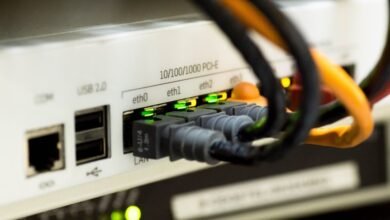
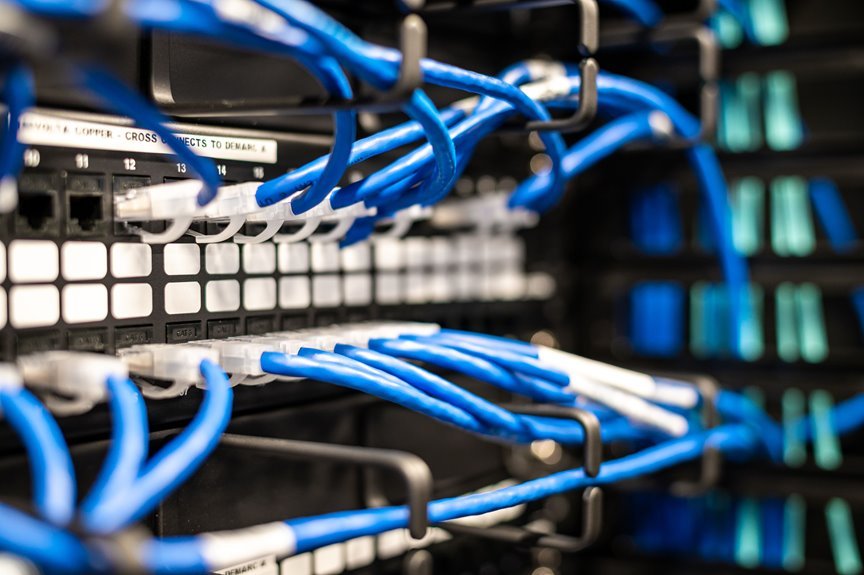
Mapping the 10.10.8 topology requires a precise inventory of devices, their subnets, and their designated roles within the network. The documentation enumerates endpoints, subnet allocations, and function classifications, enabling consistent topology mapping. Each element clarifies pathways, responsibilities, and access expectations, supporting scalable administration.
Two word idea, two word idea, ensuring deliberate, adaptable configuration while preserving clarity, governance, and freedom to evolve.
Secure Access and Firewall Basics for 10.10.8
Secure access and firewall basics for 10.10.8 establish a controlled perimeter and authenticated entry points. The framework emphasizes robust access control, layered defenses, and verifiable identities. Implemented measures include cryptographic keys, centralized policy enforcement, and minimal exposure surfaces. Network segments are protected by firewall basics, with explicit allow‑lists and continuous validation to ensure disciplined, freedom‑respecting connectivity across trusted hosts.
Performance Tuning, Monitoring, and Troubleshooting for 10.10.8
Performance tuning, monitoring, and troubleshooting for 10.10.8 encompass systematic optimization, continuous visibility, and rapid issue resolution across the network fabric. The discussion outlines objective performance tuning, supporting metrics, and repeatable monitoring techniques. It emphasizes baseline establishment, anomaly detection, and targeted remediation. Documentation focuses on reproducible procedures, minimal downtime, and scalable monitoring techniques that align with disciplined, freedom-minded network governance and reliability goals.
Frequently Asked Questions
How Is Qos Handled Within the 10.10.8 Network?
The QoS policy prioritizes critical traffic and enforces Traffic shaping to regulate bandwidth. It ensures predictable latency for essential services while maintaining overall network efficiency, preserving freedom for users to access diverse applications within defined limits.
What Are Cost Considerations for Expanding 10.10.8?
Expansion costs are substantial and must be planned meticulously. Cost considerations include capital expenditure, ongoing maintenance, and licensing. Expansion scalability hinges on modular infrastructure, vendor interoperability, and lifecycle budgeting, ensuring freedom to scale without prohibitive constraints.
How Does DNS Resolution Work for 10.10.8 Hosts?
DNS resolution for 10.10.8 hosts follows hierarchical querying; local resolvers translate names, and cache responses via resolver caching to reduce repeated lookups. Queries traverse appropriate DNS servers, balancing latency, correctness, and autonomy for the network.
What Is the Incident Response Workflow for 10.10.8?
A tangled web of incident response unfolds: forensics workflow informs containment and evidence handling, with network segmentation, asset inventory, and change control shaping response. DNS security, VPN access, data retention, and decommissioning policy anchor, while deconfliction ensures robust data governance.
How Are Device Lifecycle and Decommissioning Managed?
Device lifecycle and decommissioning are governed through formal lifecycle governance and decommission planning, ensuring secure end-of-life handling, asset disposal, data sanitization, and documentation; processes emphasize traceability, risk mitigation, and compliance while preserving operational freedom.
Conclusion
This private 10.10.8 space, tightly mapped and governed, stands as a disciplined engine of secure communication. Precise topology, vetted devices, and clearly defined subnets create predictable pathways where threats are anticipated and blocked. cryptographic keys, continuous validation, and reproducible troubleshooting form the heartbeat of resilience. As layers defend, the network breathes with measured rhythm—silent, steadfast, and auditable—ensuring compliant access while enabling scalable performance, even as demands evolve. A quiet fortress that underpins trusted data flows.