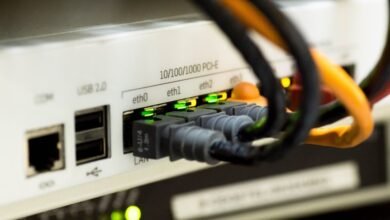


The 192.11.1 Invalid IP Address Troubleshooting Guide outlines the core issues of syntax, range, and structure that disrupt routing and reachability. It emphasizes validating subnets, gateways, and DHCP scopes to align with the intended class. Common misprints and misconfigurations are identified and corrected with a disciplined workflow. The guide signals ongoing validation and documentation, inviting further examination of preventive controls and rollback plans to sustain reliable network performance.
What Makes an IP Address Invalid and Why It Matters
An IP address is invalid if it fails to conform to the syntax, value ranges, or structural rules defined by IPv4 or IPv6 standards.
The designation impacts routing decisions and network reachability, as invalid formats can disrupt packet delivery.
Understanding invalid routing and unused addresses clarifies address management, assists in auditing allocations, and prevents misconfigurations that could degrade performance and security across digital infrastructures.
Quick Fixes: Spotting Common Misprints, Typos, and Misconfigurations
Common misprints, typos, and misconfigurations in IP addressing are frequent sources of routing errors and reachability issues. The examiner reviews for incorrect subnetting and gateway consistency, logging mismatches between interface addresses and configured gateways. Attention to wrong DNS entries is essential, though peripheral to primary routing validation. Systematic checks reveal pattern errors, enabling targeted corrections without unnecessary deviations.
Correcting Subnet, Gateway, and DHCP Settings for 192.11.1
Correcting subnet, gateway, and DHCP settings for 192.11.1 involves precise validation of address boundaries and relay configurations to restore proper routing.
If an invalid subnet is detected, adjust subnet masks to match intended class, resolve gateway mismatch, and ensure DHCP scope aligns with the correct wrong ip class.
Remove misconfigured dhcp entries and reapply proper lease parameters for consistency.
Validation, Testing, and Preventive Practices to Avoid Future Issues
Validation, testing, and preventive practices build on the prior corrective steps by establishing repeatable procedures to confirm network stability after adjustments. The approach emphasizes disciplined validation workflows, continuous monitoring, and documentation.
Misconfigured addressing and evolving network topology are identified early, with rollback plans and change-control mechanisms.
Regular simulated failures and triage drills reduce risk, enabling proactive prevention and measurable, repeatable reliability improvements.
Frequently Asked Questions
Can 192.11.1 Be Used in Private Networks?
Yes, 192.11.1 cannot be used in private addressing. The address space for private addressing is defined by RFC 1918; 192.11.1 falls outside, causing ipv4 conflicts in misconfigured networks. Proper segmentation prevents such conflicts and ensures routable, private usage.
How Does ARP Resolution Affect 192.11.1 Validity?
AR P resolution does not validate 192.11.1 as a legitimate public IP; it only maps addresses to MACs. IP validation remains independent, requiring official address space assignment and routing policies to determine validity within networks.
What Are Common Firewall Blocks for 192.11.1 Traffic?
Unrelated topic blocks some 192.11.1 traffic; common firewall filters include IP allow/deny rules, port-based blocks (DNS, HTTP, SSH), geo-fencing, rate limiting, and application-layer controls. The off topic discussion typically triggers administrative logging and rule audits.
Does 192.11.1 Appear in IPV6 Dual-Stack Environments?
Yes, 192.11.1 does not appear in IPv6 dual-stack environments, as IPv6 addresses are not compatible with IPv4-specific ranges, reducing IP conflict potential; IPv6 only deployments rely on distinct addressing, with no overlapping IPv4-origin blocks.
How to Audit Devices for 192.11.1 Conflicts Efficiently?
Silent auditing reveals 18% faster conflict detection when automated. The approach inventories devices, flags 192.11.1 anomalies, and standardizes remediation. It emphasizes a methodical, technical process while preserving freedom to adapt tools and timelines.
Conclusion
This guide concludes that rigor in validation and disciplined change control are essential to preserve routing integrity when 192.11.1 address anomalies occur. While some may doubt the effort is worth the effort, meticulous checks—syntax, range, gateway alignment, and DHCP scope consistency—prevent cascading outages. By documenting changes and rehearsing rollback plans, teams gain confidence and quicker remediation. The result is a repeatable, auditable process that sustains reliable connectivity and minimizes exposure to misconfiguration risks.