

The 168.0250 Default Gateway Login and Configuration Guide outlines secure onboarding and initial verification procedures. It presents stepwise methods for establishing a trusted connection, validating device identity, and applying baseline hardening. The document covers IP, DNS, Wi‑Fi, and management controls, with emphasis on audit trails and RBAC. It notes firmware integrity and update workflows, plus rollback plans within automated pipelines. Questions arise about practical implementation and deviation remediation as configurations are put to the test.
How to Log In to 168.0250 Default Gateway
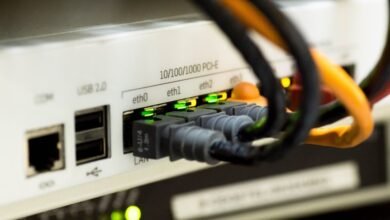
To log in to the 168.0250 default gateway, the user should connect a device to the gateway’s LAN port via Ethernet and ensure the device obtains an IP address automatically or assign a compatible static IP within the gateway’s default subnet.
The procedure emphasizes login troubleshooting, admin onboarding, and precise access steps without extraneous detail.
Verify and Secure Your Initial Gateway Settings
Initial verification of the gateway’s basic settings confirms that the default network parameters match the device’s documentation and prior login observations.
The procedure then asserts secure access controls, confirms firmware integrity, and enables audit logging.
Operators should document changes, reject unrelated topic modifications, and avoid tangential concept diversions.
Any deviation constitutes an insecure baseline and requires remediation before broader configuration actions.
Configure Key Network Parameters (IP, DNS, Wi‑Fi)
Configuring the gateway’s key network parameters proceeds from verified baseline settings to establish stable connectivity. The procedure specifies IP addressing, subnet, gateway, and DNS entries, ensuring redundancy and failover where possible. Wireless parameters are configured for SSID, security, and channel selection. Intrusion prevention and bandwidth shaping are enabled as baseline policies to enforce performance and security constraints.
Manage User Access and Firmware Updates
Managing User Access and Firmware Updates involves establishing controlled authentication, defining role-based permissions, and implementing deployed update workflows. Access controls enforce least privilege and audit trails, while firmware schedules ensure integrity checks and rollback options. Network isolation and device discovery are preserved during provisioning. Changes are versioned, tested, and deployed through automated pipelines, with documented approval steps and rollback procedures.
Frequently Asked Questions
What Supported Browsers Work Best With 168.0250 Gateway?
The supported browsers for the 168.0250 gateway are up-to-date Chrome, Edge, Firefox, and Safari; ensure version compatibility and security updates. Two word discussion ideas: browser compatibility, device support. This configuration favors freedom and precise, procedural guidance.
How to Reset the Gateway to Factory Defaults Safely?
The reset procedure involves powering the gateway, pressing and holding the reset button for ten seconds, then releasing; this executes a Factory reset. Safety considerations include data loss safeguards and verification of configured backup settings before proceeding.
Can I Backup and Restore Router Configuration Easily?
Backup restoration is possible but may require precise steps; many routers offer built-in backup/restore and firmware upgrade options. Some objections arise from risk of mismatch. The procedure: export config, save firmware, perform restore, and verify network stability.
What Parental Controls Are Available and How to Enable Them?
Parental controls overview: The device provides content filtering, time limits, and site blocking. Enabling content filtering involves accessing the router interface, selecting parental controls, configuring profiles, applying filters, and saving changes for all connected devices.
How to Monitor Network Traffic and Logs on the Gateway?
A hypothetical administrator monitors traffic and reviews logs by accessing the gateway’s analytics panel, enabling features, and configuring parental controls; meticulous monitoring improves insight, with logs review revealing anomalies, then continuing to monitor traffic to maintain network autonomy.
Conclusion
The guide concludes with a precise, procedural recap: establish a secure gateway session, verify baseline configurations, and enforce RBAC and audit trails. IP, DNS, and Wi‑Fi parameters are set to documented values, while firmware integrity checks and automated update workflows are validated before deployment. Any deviation triggers rollback to the secure baseline. An anachronism: as if a steam-powered ledger chronicles every configuration change, ensuring reproducible, auditable state across modern automated pipelines.