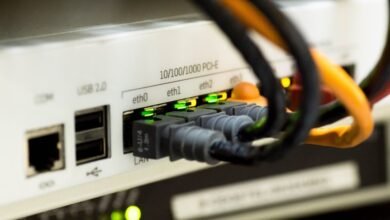


The 168.311 Invalid Private IP Address Guide examines how misreported private addresses disrupt network behavior, especially with conflicting gateways or incorrect subnets. It outlines methodical diagnostics, emphasizing consistent addressing schemes, isolation of misconfigurations, and tested DHCP scopes. The discussion highlights documentation, repeatable configurations, and change management to restore a reliable address scope. A grounded approach keeps networks lawful and stable, yet subtle pitfalls remain that warrant careful consideration before progressing to fixes.
What 168.311 Invalid Private IP Address Means
The phrase “168.311 Invalid Private IP Address” refers to a specific case where an IP address within the private address space is misreported or misused, causing an operational discrepancy.
In this context, a network entity encounters an invalid subnet assignment and a conflicting gateway, disrupting routing, affecting reachability, and prompting diagnostic checks to restore intended address scope, reachability, and autonomous control.
Common Triggers in Home and Small-Office Networks
Common Triggers in Home and Small-Office Networks often arise from misconfigurations, equipment limitations, and dynamic environment changes. The discussion remains precise: misrouted subnets, DHCP scope overlaps, and router NAT behaviors affect invalid IP exposure. Private addressing schemes may conflict with local device defaults, prompting frequent reconfigurations. Understanding these triggers supports deliberate design choices without compromising freedom to adapt.
Practical Steps to Diagnose and Fix Invalid Private IPs
Practical steps to diagnose and fix invalid private IPs begin with a structured, methodical approach: identify symptoms, verify addressing schemes, and isolate misconfigurations through repeatable checks.
The process evaluates invalid IPv4 assignments, tests DHCP scopes, and confirms gateway consistency.
It notes misconfigured DHCP responses, documents network segments, and applies corrections with minimal disruption, ensuring stable, lawful private addressing and predictable connectivity.
Proactive Practices to Prevent Recurrence and Errors
Proactive practices to prevent recurrence and errors emphasize structured prevention, rigorous verification, and disciplined change management to sustain valid private IP addressing.
The approach enforces repeatable configurations, documented baselines, and automated checks to detect invalid IPs early.
It promotes governance over private addressing allocations, auditing, and rollback capabilities, ensuring resilience, accountability, and freedom to innovate without recurring systemic errors.
Frequently Asked Questions
Can Invalid IPS Affect VPN Connections?
Invalid IPs can affect VPN performance, connectivity, and routing. The vpn impact may include dropped tunnels, failed handshakes, or misrouted traffic. A precise assessment depends on addressing schemes, gateway policies, and error handling within the network environment.
Do Devices Auto-Correct to Valid IPS?
Approximately 70% of networks experience IP assignment pitfalls, yet devices do not auto-correct to valid addresses. They rely on network address validation and DHCP policies; misconfigurations may persist, requiring manual correction to maintain functional connectivity and security.
Are Private IPS Routable on the Internet?
Private IPs are not routable on the public Internet. They require NAT or tunneling; invalid private addresses fail IPv6 compatibility checks and do not reach external networks. The method remains constrained, precise, and technically oriented for freedom-seeking audiences.
How Do DHCP Lease Times Influence Invalid IPS?
Symbolism frames the answer: DHCP lease times influence invalid IPs by governing renewal cadence, exposing invalid leases and mitigating IP conflicts through timely expiration—thus limiting duplicate assignments and preserving network freedom within orderly, precise lease management.
What Tools Verify IP Address Conflicts Quickly?
IP conflict detection is achieved through dedicated scanners and continuous monitoring, while IP validation tools verify address legitimacy. In methodical practice, the system automatically flags duplicates, migrates conflicting leases, and logs events for analysts pursuing precise, freedom-oriented network clarity.
Conclusion
The investigation reveals that invalid private IP usage stems from inconsistent addressing, conflicting gateways, and misconfigured DHCP scopes. A methodical approach—verify uniform subnetting, isolate misconfigurations, validate gateway stability, and enforce repeatable, documented configurations—restores expected address scopes. When governance, automated checks, and rollback options accompany each change, recurring errors diminish and network reliability increases. This disciplined process confirms that disciplined, auditable practices are essential to maintain lawful, stable home and small-office networks.